Moving From Outdoor to Indoor Badminton Changes More Than You Think
Quick Answer: Indoors your shuttle flies further and more predictably, the floor grips far better than grass or asphalt, the lighting is above you instead of around you, and every hall has a drift — a subtle air current that makes one end play longer than the other. Expect your clears to go long for the first two sessions, adjust your footwear before you adjust your stroke, and learn the drift in your warm-up rather than in the third game.
Outdoor badminton in summer is a different sport wearing the same clothes. Wind decides everything, the shuttle does what it likes, and nobody keeps a serious score.
Then you move indoors and suddenly the shuttle goes exactly where you hit it — which is a problem, because you’ve spent three months hitting it harder than necessary.
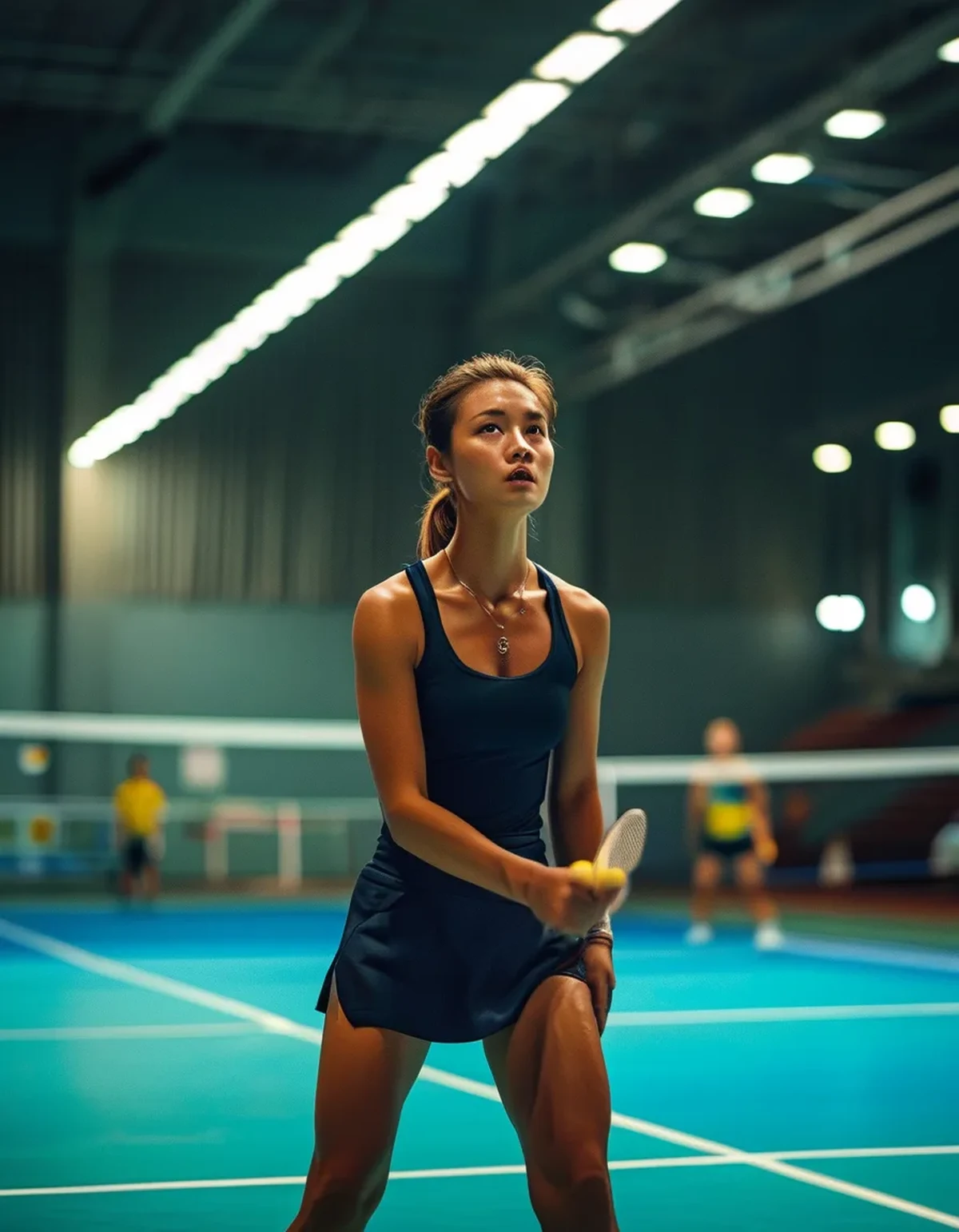
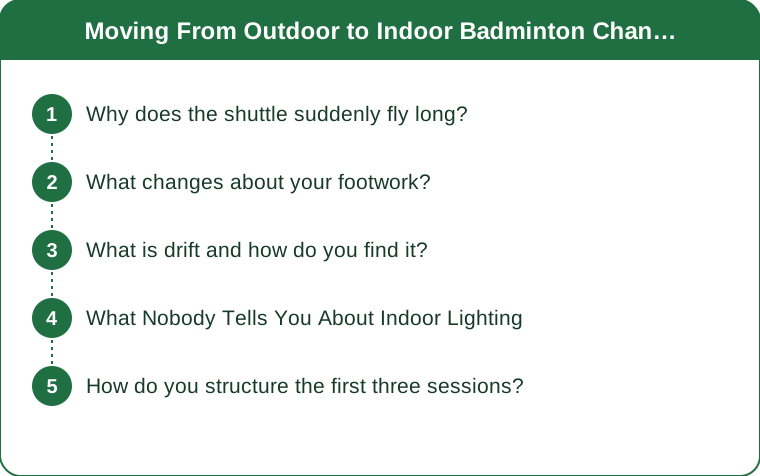
Why does the shuttle suddenly fly long?
Because you’ve been compensating for wind and drag without noticing, and both of those just disappeared.
A shuttlecock decelerates dramatically — it’s the fastest object at impact in racket sports and one of the slowest by the time it lands. That deceleration comes from air resistance acting on the feathers or the skirt, and anything that increases resistance shortens the flight.
Outdoors you have wind, usually higher air movement, and often higher humidity — all of which shorten the shuttle. You adapted by hitting through it. Indoors, in still air, that same swing sends the shuttle two feet past the baseline.
There’s a second factor people don’t account for: temperature. Warmer air is less dense and the shuttle flies further. An indoor hall in September that’s still holding summer heat will play noticeably faster than the same hall in January. Shuttles are actually graded by speed for this reason — a slower shuttle for warm halls or high altitude, a faster one for cold conditions.
What to do: for the first two sessions, aim short deliberately. Target a spot three feet inside the baseline on clears and let the flight teach you the new distance. Trying to correct mid-rally after each out-shot takes far longer.
What changes about your footwork?
The floor, and it changes more than the shuttle does.
Outdoor surfaces — grass, concrete, asphalt — either grip too little or too much and are never consistent. You develop a hedged movement pattern: smaller steps, less commitment, and a lunge you don’t fully sink into because you don’t trust the surface.
An indoor court grips reliably, which means you can finally lunge properly and push off hard. That’s the good news. The bad news is that your legs aren’t conditioned for it, and the first indoor session after a summer outdoors produces a very specific soreness in the quads and adductors from deep lunges you haven’t done in months.
The footwear point is not optional. Non-marking indoor court shoes with a gum sole are what makes the grip available; running shoes on a wooden court both slide and, worse, have a raised heel and soft midsole that make lateral movement genuinely unsafe. Rolled ankles in badminton come overwhelmingly from lateral movement in the wrong shoes.
Plan the first two indoor sessions as shorter than usual, with a real warm-up including lunges and lateral movement. The soreness is predictable and manageable if you don’t play three games on night one.
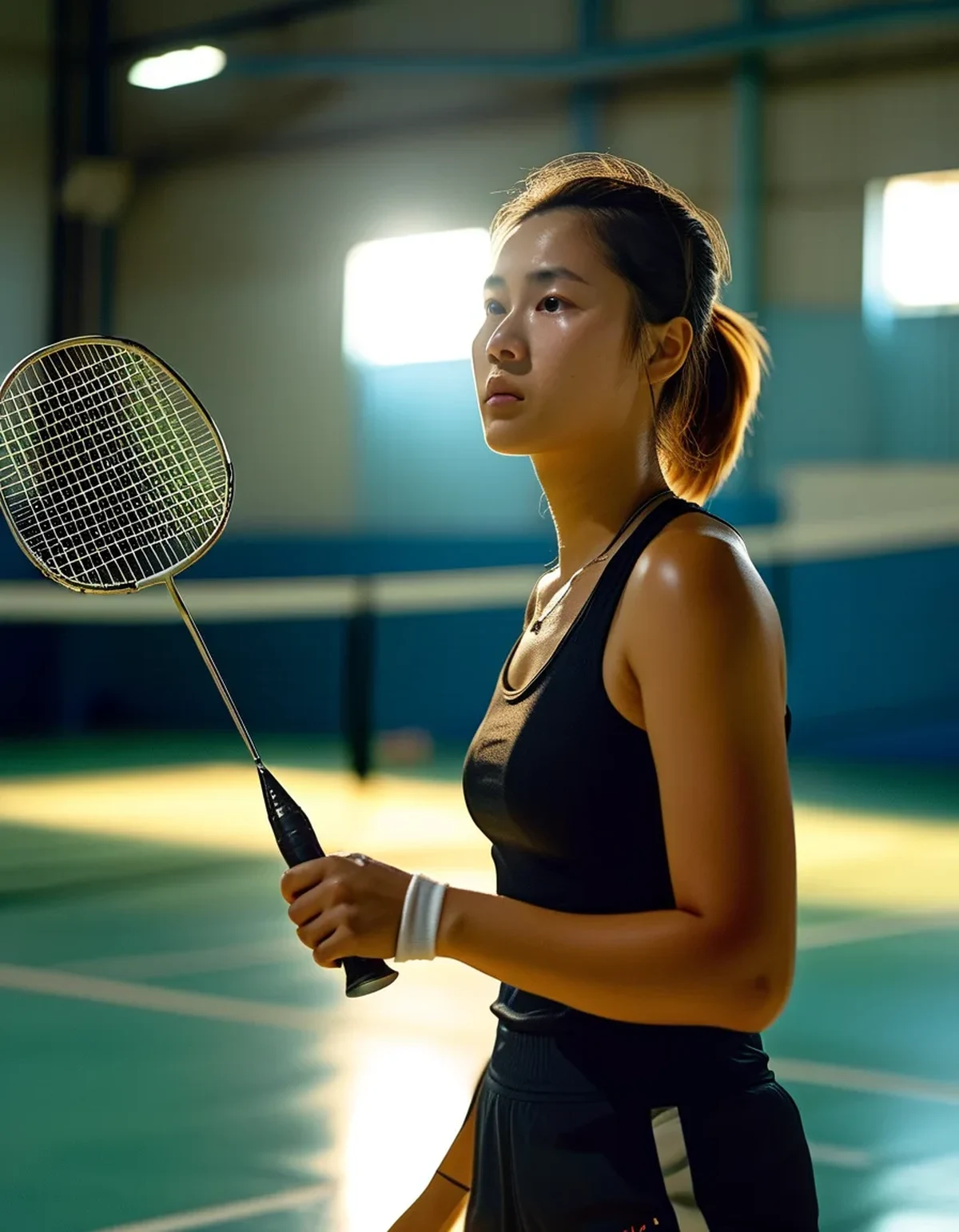
What is drift and how do you find it?
Every indoor hall has air movement — from ventilation, heating, open doors, or just the building’s convection. It’s usually subtle enough that you can’t feel it standing still, and strong enough to change where a shuttle lands.
The effect: one end of the court plays long and the other plays short. On the short end your clears fall in easily and your opponent’s clears drop before the baseline. On the long end, everything you hit sails out and you have to hit shorter than feels right.
How to find it in warm-up, in about two minutes:
- Hit a few high clears from each end with the same swing. Watch where they land relative to the baseline.
- Watch a lift or two. Drift shows up most clearly on high, slow shots — the longer the shuttle is in the air, the more the drift acts on it.
Then play accordingly. On the long end, use drops and net play and be conservative with clears. On the short end, clear aggressively — you can push your opponent deep with less risk, and their clears will fall short and give you attacking chances.
Good players read the drift in the knock-up. Most casual players never think about it and spend the whole match confused about why one end feels harder.
What Nobody Tells You About Indoor Lighting
Outdoors, light comes from a broad sky. Indoors, it comes from a grid of fixtures directly above the court — which is exactly where you’re looking when you hit an overhead.
Things that follow:
You will lose the shuttle against the lights, particularly on high clears and lifts, until you adapt. The adaptation is partly learning to track the shuttle earlier in its flight rather than picking it up at the peak, and partly just repetition.
Ceiling height changes the game more than lighting does. A low-ceilinged hall makes high clears impossible and pushes everyone toward flat, fast play. If you learned an outdoor game built on high defensive clears, a low hall will feel like your main shot has been deleted. Adapting means developing a flatter drive game — worth doing regardless, because it’s the more useful skill.
Backgrounds matter enormously. A white or light-colored back wall makes a white shuttle nearly invisible. This is why serious venues have dark green or blue backdrops. If your hall doesn’t, you’ll struggle on fast returns and it isn’t your eyesight.
Shadows and glare vary by court. In a multi-court hall, one court is usually noticeably worse lit than the others. If you get a choice, it’s worth taking.
None of this is discussed much, and all of it explains a chunk of why your first indoor sessions feel worse than your outdoor summer did.
How do you structure the first three sessions?
A concrete on-ramp so the transition takes three sessions instead of six weeks.
Session 1 — Calibration. Shorter than usual, maybe 45 minutes. Long warm-up with lunges and lateral movement. Spend the knock-up doing clears from both ends to find the drift and the new length. Play games but treat out-shots as information rather than errors. Expect leg soreness in two days.
Session 2 — Length and footwork. Full warm-up again. Deliberately practice clear-to-clear rallies from both ends before playing. Your distance calibration will be roughly right by the middle of this session. Focus footwork on genuinely sinking into lunges now that the floor allows it — this is the biggest athletic gain of moving indoors.
Session 3 — Play the indoor game. By now the length is automatic. Start using the things indoors gives you: drops and net play that wind made impossible, deception, and controlled placement. This is where indoor badminton becomes more interesting than the outdoor version — precision suddenly rewards you.
Throughout, two practical notes. Bring more water than you think; indoor halls are warm, still, and dehydrating in a way a breezy outdoor court isn’t. And check your grip — hands sweat more indoors, and a slick grip is behind a lot of mysteriously bad shots in the first few weeks of the season.
One last thing worth doing now: indoor court time gets scarce from October onward as leagues start and casual bookings fill. If you’re planning an indoor season, book the regular slot in the next two weeks rather than after the rush.
TL;DR:
- Still indoor air means the shuttle flies further — aim three feet inside the baseline for the first two sessions.
- Warm halls play faster than cold ones; shuttles are graded by speed for exactly this reason.
- Indoor court shoes with gum soles are the real safety item. Running shoes on wood cause rolled ankles.
- Every hall has drift — find it in the knock-up, then clear from the short end and drop from the long end.
- Ceiling height and back-wall color shape the game more than most players realize.
Give it three sessions. The precision that wind used to steal is the whole reason indoor badminton is the better version.
Keep Reading
This article is for general informational and styling purposes only. Fit, sizing, and product availability may vary.