Your Backhand Clear Dies at Mid-Court: The Fixes That Add Depth
Quick Answer: A backhand clear that lands mid-court almost always fails at one of three points: a forehand grip carried into a backhand stroke (fix: thumb grip), a contact point behind your body instead of high and slightly in front (fix: earlier footwork, hit on the way up), or a big arm heave instead of a compact forearm rotation snap (fix: the swing is a whip-crack, not a shove). Diagnose which one is yours - most players stack two - and the shot adds meters within weeks.
Everything else in your game improved, and this one shot stayed a liability - so predictable that opponents serve to your backhand corner on purpose. The comforting news: the backhand clear is not a strength shot, and the players who hit it deep are not stronger than you. They are doing three specific things differently.
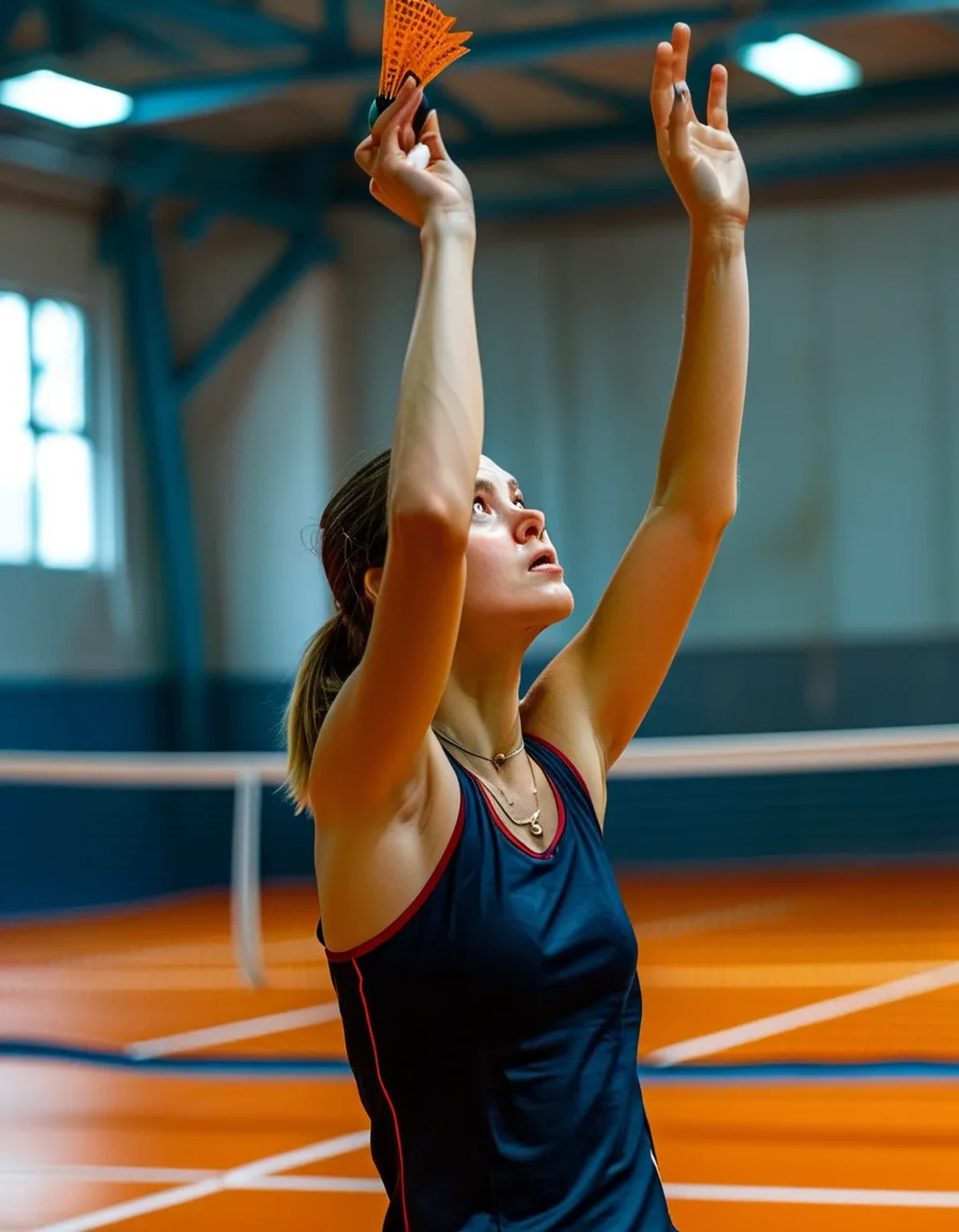
Why is the backhand clear genuinely the hardest basic shot?
Knowing why it is hard tells you exactly where to look for your leak.
The mechanics run backwards. Every overhead forehand uses the body’s natural throwing pattern - legs, trunk rotation, shoulder, wrist, in a chain you have owned since childhood. The backhand clear reverses the architecture: back turned to the net, hitting away from your body’s strong side, with almost no trunk rotation available. The throwing chain is gone, and what replaces it is a much smaller engine - forearm rotation (supination) plus a thumb push - that nobody owns until they train it.
The shot happens under retreat pressure. You hit backhand clears while moving backwards into your rear corner, usually slightly late, usually off balance. Compare that with the forehand clear’s setup time and the difficulty gap is obvious before technique even enters.
And the feedback loop teaches the wrong lesson. When a backhand clear falls short, the intuitive diagnosis is not enough power, so players swing harder with the arm - which tightens the grip, kills the whip, and makes the shot shorter. The harder they try, the worse it gets, which is why this shot uniquely resists effort-based improvement.
The reframe that unlocks everything: the backhand clear is a timing-and-leverage shot wearing a power-shot costume. Advanced players hit it deep with a relaxed, compact motion that looks almost lazy. Every fix below is a way of buying leverage and timing instead of muscling.
Is your grip quietly sabotaging every backhand?
For most players, yes - and it fails invisibly, because the wrong grip still makes contact. It just cannot generate depth.
The failure: carrying the forehand grip into backhand strokes. With a forehand grip, the racket face on the backhand side points partly downward or sideways at contact, so you compensate mid-swing with a contorted wrist - bleeding power and consistency on every hit.
The fix is the thumb grip (backhand grip): rotate the racket slightly in your fingers so the flat pad of your thumb presses against the wider bevel of the handle, roughly behind the hitting face. The thumb stops wrapping around like a fist and becomes a brace - the launch pad the entire stroke pushes off.
What it should feel like:
- The thumb pad flat on the bevel, not the thumb’s edge, not wrapped
- The grip held in the fingers, relaxed - around 3 out of 10 tension between shots. A strangled handle cannot whip, and grip tension is the most common secondary leak
- A slightly longer hold (nearer the handle’s end) for clears - more lever, more depth
The switching skill matters as much as the grip itself. Rallies give you a fraction of a second to change grips, and players who know the thumb grip but switch late still hit forehand-grip backhands under pressure. Train the transition specifically: racket in ready position, someone calls forehand or backhand randomly, you switch and shadow-swing - 30 seconds daily. The fingers learn to do it without the eyes checking within two weeks.
Quick self-test: freeze your next backhand-corner shot and look at your thumb. Wrapped knuckle showing means the grip never switched - and you just found leak number one.
Where should you actually meet the shuttle?
Contact point is the leak hiding behind most stubborn cases - because a perfect grip and swing cannot rescue a shuttle you meet behind your shoulder.
The target: high, arm extended, and slightly in front of your body line - roughly above and just ahead of your racket-side shoulder as you face the rear corner. Meeting the shuttle there lets the racket face drive it forward and up with the full lever of your extended arm.
The failure: letting the shuttle drift behind you. Every centimeter behind your body line costs you angle and leverage - from back there, the racket can only flick the shuttle steeply upward, producing the classic short, high, please-smash-me clear. Most players who think they have a power problem have a shuttle-behind-them problem.
Which makes footwork half of this shot:
- Move early. The moment you read the shot heading to your backhand rear corner, turn and go - the first two steps decide whether contact happens in front or behind. Late recognition is unfixable by swing technique.
- Travel with your back to the net, racket already up. The final position: racket-side foot stepping toward the corner, body turned away from the net, elbow high and pointing at the ceiling before the swing starts. Preparing the arm during the last step - not after arriving - buys the timing margin everything else depends on.
- Hit on the way up when possible. Meeting the shuttle earlier and higher in its arc beats letting it drop - the drop feels like more preparation time and actually delivers a lower, more behind-you contact.
Drill for this in isolation: a partner or coach feeds gentle high serves to your backhand corner while you focus purely on early turn, high elbow, and meeting the shuttle in front - at 60 percent swing effort. Depth appearing at 60 percent effort is the proof that contact, not power, was the thief.

5 Mistakes Everyone Makes on the Backhand Clear
Mistake 1: Swinging with the arm instead of snapping the forearm. The depth engine is rapid forearm rotation - the racket accelerating through contact like a whip cracking, driven by supination and the thumb push. The arm positions the whip; it does not throw it. If your follow-through is huge and your clears are short, the engine order is reversed - big backswing, small result. The correct stroke is compact: short backswing, explosive rotation through contact, brief follow-through.
Mistake 2: Gripping harder for more power. Maximum tension arrives at contact only - a fast squeeze at the moment of impact - not carried through the whole swing. Constant tension is an anchor on racket-head speed.
Mistake 3: Facing the net. Chest turned toward the net converts the stroke into a weak sideways slap. Back turned to the net is not a style point; it is what lets the elbow lead and the forearm rotate through its full range.
Mistake 4: Practicing it only in games. In rallies you hit maybe five backhand clears, all under pressure, all with old habits. The stroke rebuilds in repetition without consequence - multi-shuttle feeds, wall work, shadow swings - and games are where the rebuilt version gets tested, not built.
Mistake 5: Refusing the tactical alternatives while the shot develops. The backhand drop and the backhand drive are easier strokes that neutralize the same corner - and at every level below international, a tight backhand drop is often the smarter reply than a heroic clear anyway. The first mistake steals the most meters, but this one loses the most rallies: playing the shot you wish you had instead of the shot you own tonight.
What does the two-week rebuild look like?
Fifteen minutes a day, most of it without a court:
Days 1 to 4 - grip and engine, at home. Thumb-grip familiarization: hold, check, release, 20 times. Then shadow the compact stroke - elbow high, short backswing, forearm snap, thumb push - 20 slow, 20 fast, daily. Add the grip-switch drill (random forehand-backhand calls, 30 seconds). No shuttle yet; the pattern installs faster without outcome anxiety.
Days 5 to 8 - contact calibration. On court or against a wall: gentle self-feeds or partner feeds to the backhand side, hitting at 60 percent effort, full attention on meeting the shuttle high and in front. Depth is not the goal yet - clean contact position is. Film two swings from the side; the camera will show you the contact point your body is lying about.
Days 9 to 12 - the whip under feed pressure. Multi-shuttle feeds to the rear backhand corner: early turn, travel, high elbow, snap. Now chase depth - target the back third of the court, 20 to 30 shuttles per session. Expect a strange milestone here: the clears that go deepest feel easiest. That is the whip replacing the heave, and it is the signature of the fixed shot.
Days 13 to 14 - game integration with a rule. Play practice games with one constraint: every backhand-corner shot is either your new clear or a deliberate drop - no panicked old-habit flicks. Choosing consciously under mild pressure is the final installation step.
Maintenance after: 20 shadow swings on training days, and one multi-shuttle corner session a week. Racket-skill patterns fade politely if unfed - and this one took too much work to lend back to the old habit.
FAQ: Backhand Clear Questions, Answered
Should I just run around my backhand like the pros do?
When time allows, yes - an around-the-head forehand is a stronger shot and elite players use it constantly. But they do it by choice from good positions; club players do it by necessity from desperate ones. Owning a functional backhand clear is what turns the run-around into a tactic instead of an escape route.
Does racket or string choice affect backhand depth?
Marginally, and only after technique. A slightly head-light, flexible racket helps generate whip for players with slower swings, and overly high string tension punishes off-center backhand contact. But no equipment adds the meters that a thumb grip and an in-front contact point add for free.
My backhand clears go deep but always down the line - why?
Contact timing: shuttle met slightly late naturally sends the shot straight, since the racket face has not come around. Cross-court backhand clears require an even earlier, more in-front contact - they are the graduation exam of this shot. Master depth straight first; the angle unlocks with the same earlier-contact progression.
How long until it holds up in real matches?
With daily shadow work and weekly feeds, most players trust the shot under moderate pressure in four to six weeks - and the diagnostic milestones arrive in order: grip switching without thought first, then contact moving in front, then depth at low effort, then depth under pressure. The corner stops being a target on your court roughly a month after it stops being a fear in your head.
TL;DR:
- Three failure points: forehand grip carried into the shot, contact behind the body, and arm-heave instead of forearm snap - most players stack two
- Fix the grip first: thumb pad flat on the bevel, relaxed fingers, and drill the 30-second switching habit daily
- Meet the shuttle high and slightly in front - early turn and a pre-raised elbow buy the timing; behind-you contact is unfixable by power
- The engine is a compact whip: short backswing, explosive forearm rotation, squeeze only at impact - deep clears feel easy, not hard
- While rebuilding, use the backhand drop tactically; two weeks of shadow work and feeds beats two years of in-game hoping
The backhand clear stays weak exactly as long as it is treated as a strength problem. Give it a thumb to push off, a contact point it can leverage, and a whip instead of a shove - and the corner your opponents have been serving to becomes just another part of your court.
Keep Reading
This article is for general informational and styling purposes only. Fit, sizing, and product availability may vary.