Why Badminton Elbow Pain Is Usually a Grip Problem, Not a Swing Problem
Quick Answer: Most recurring badminton elbow pain comes from gripping the racket too tightly throughout the entire swing rather than from swing mechanics — a relaxed grip that only tightens at the moment of contact reduces the repetitive forearm strain that causes the pain.
You’ve adjusted your swing, iced after every session, and the elbow ache keeps coming back. Before assuming it’s a swing flaw, check how tightly you’re actually holding the racket the whole time.
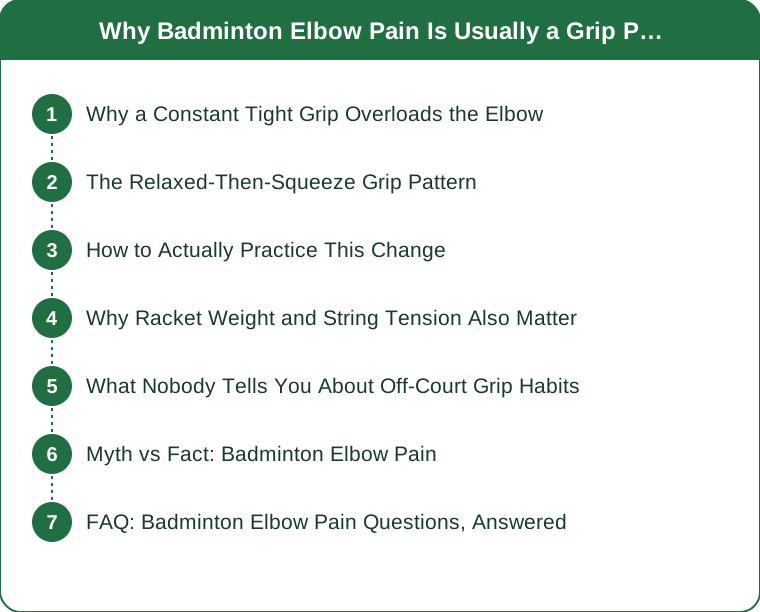
Why a Constant Tight Grip Overloads the Elbow
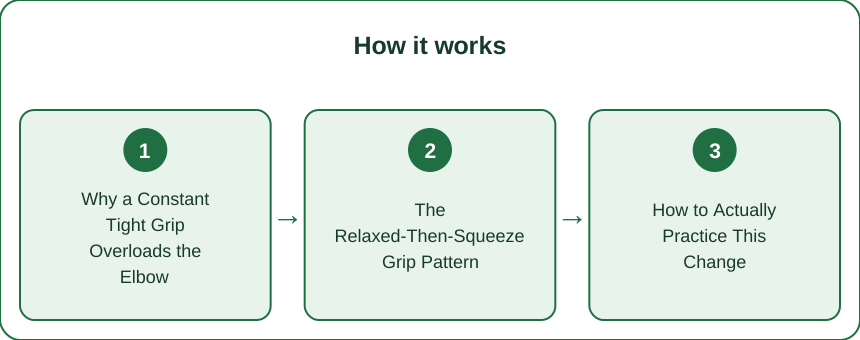
Gripping the racket at high tension for the entire rally — not just at contact — keeps the forearm extensor muscles (the ones attaching near the outer elbow) under near-constant load, which is the same repetitive stress pattern behind most ‘tennis elbow’-type injuries, badminton included.
The Relaxed-Then-Squeeze Grip Pattern
Elite players generally hold the racket loosely between shots and only firm up the grip in the fraction of a second around contact, then relax again immediately after. This on-off pattern dramatically reduces total time-under-tension for the forearm compared to a constant firm grip through the whole rally.
How to Actually Practice This Change
Between shots, consciously check that your grip is loose enough to wiggle the racket head slightly — if you can’t, you’re holding on too tight even in the ‘rest’ moments between shots. Shadow-swinging at home while deliberately practicing this loose-then-firm pattern builds the habit before bringing it onto the court.

Why Racket Weight and String Tension Also Matter
A racket that’s too head-heavy or strings tensioned too tight both increase the grip force needed to control the racket through a swing, indirectly encouraging the over-gripping habit. If elbow pain persists despite grip changes, checking equipment specs against your strength level is a reasonable next step.
What Nobody Tells You About Off-Court Grip Habits
People with jobs involving a lot of gripping (typing with tense hands, carrying bags with a tight fist) often bring that baseline tension onto the court without realizing it — the badminton grip fix works better alongside noticing and reducing unnecessary grip tension in daily life too.
Myth vs Fact: Badminton Elbow Pain
Myth: Elbow pain means you need a stronger forearm. Fact: forearm strengthening can help as prevention, but if the root cause is a constant over-tight grip, strengthening without fixing grip pattern just delays the same injury.
Myth: A firmer grip gives you more power. Fact: power in badminton comes primarily from wrist snap and racket head speed at the moment of contact, not from constant grip tension — the firm moment only needs to be brief.
FAQ: Badminton Elbow Pain Questions, Answered
How long does it take to change a grip habit?
Most players notice a real shift in grip tension awareness within 2-3 weeks of deliberate practice, though it can take longer to feel fully automatic during fast rallies.
Should I rest completely if my elbow already hurts?
Mild, nagging pain often benefits from a short rest (a few days to a week) combined with grip retraining, but sharp or worsening pain should be evaluated by a physical therapist or doctor before continuing to play.
Does racket grip size matter for elbow pain?
Yes — a grip that’s too small forces extra squeezing to maintain control, while too large can also increase strain; trying a slightly different grip size is a reasonable low-cost experiment.
TL;DR:
- Constant tight grip through the whole rally, not swing flaws, causes most recurring elbow pain
- Practice a relaxed grip that only firms briefly at contact
- Check racket weight and string tension if pain persists despite grip changes
- Notice and reduce baseline hand tension off-court too
Before chasing swing adjustments or more icing, check your grip tension between shots — most persistent badminton elbow pain traces back to a grip habit, not a mechanical swing flaw.
Keep Reading
This article is for general informational and styling purposes only. Fit, sizing, and product availability may vary.