Feet First: The Footwork That Turns Badminton Beginners Into Players
Quick Answer: Badminton footwork improves fastest through three drills: the split step (a small hop timed to your opponent’s contact), the six-corner shadow (moving to each court corner without a shuttle), and the lunge (a controlled step for front-court shots). Practicing these consistently for two weeks fixes most of what feels like “bad hands.”
Your racquet gets blamed for a lot. Too slow, wrong angle, possibly cursed by whoever strung it last. Meanwhile the real culprit is standing directly underneath you the whole time — your feet.
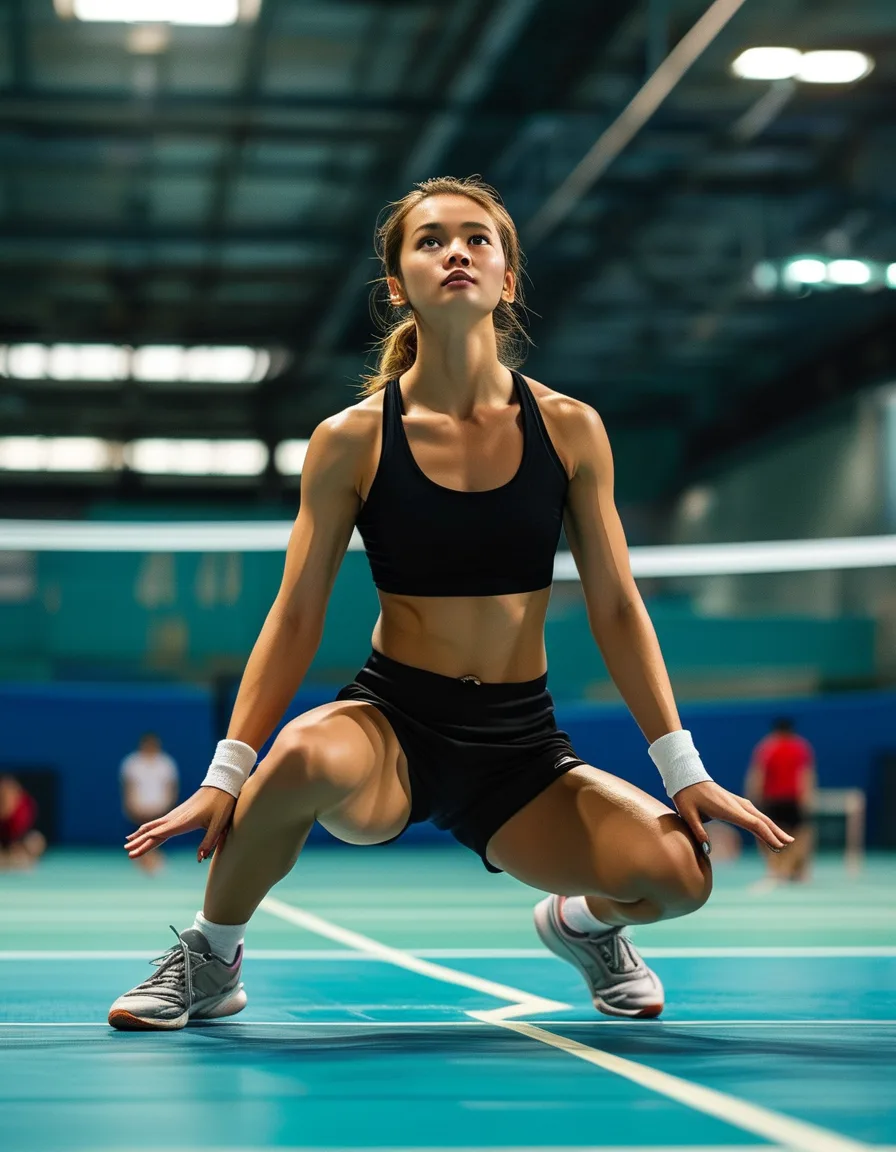
Why does footwork matter more than the racquet in badminton?
Badminton is, at its core, a footwork sport with a racquet accessory. Every shot you’ve ever mishit was probably a positioning problem in disguise — you arrived late, reached instead of stepped, and asked your wrist to fix what your legs should have handled three steps earlier. Fix the feet and the racquet work gets dramatically easier almost by accident.
What is the split step and why does everyone say it’s the most important move?
The split step is a small hop you do the instant your opponent makes contact with the shuttle, landing with your feet shoulder-width apart and your knees soft. It’s the sport’s ignition key — without it, you’re always leaving late, no matter how fast you actually are. Try this: do it on every single rally, even in practice rallies that don’t feel like they matter, until it happens without you consciously deciding to do it. That’s the goal — reflex, not thought.
How do you practice badminton footwork without a shuttle?
This is where the six-corner shadow drill earns its keep. Starting from center court, move out to each of the six key corners (front-left, front-right, mid-left, mid-right, back-left, back-right) and return to center after each one — no shuttle required, just you and the court markings.
- Two minutes per set is plenty to start
- Focus on quick, controlled steps rather than big lunging strides
- Keep your racquet up the whole time, like you’re actually expecting a shot
Your legs memorize the court’s geography through repetition, which frees up your brain to worry about the shuttle instead of where your feet are supposed to be going.
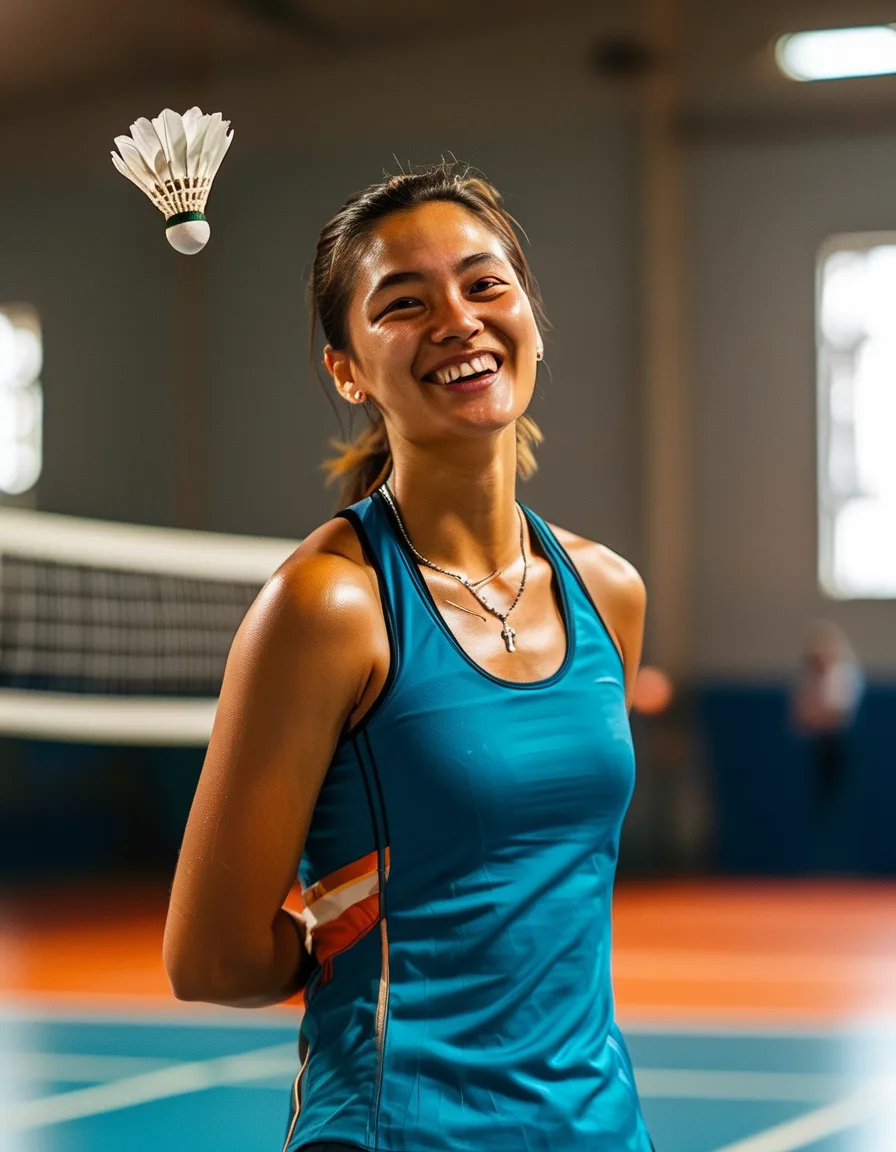
What’s the right way to lunge for front-court shots?
Front-court shots are essentially lunges wearing a sports costume. The mechanics are simple even if the timing takes practice: take a big step forward, keep your knee tracking over your toe rather than caving inward, reach for the shuttle with control, then push back off that front leg to recover to center. Squats at home genuinely pay dividends on court — the gym and the game are colleagues here, not separate worlds, so a few sets of bodyweight squats a couple times a week builds real transferable strength for that push-off.
Why does better footwork make your hands look better too?
Arrive early to the shuttle and every shot gets easier — you’ve got time to set your grip, pick your angle, and swing smoothly instead of jabbing at it. Arrive late and no grip technique in the world can save you; you’re just reacting. Good footwork buys you time, and time is what beginners often mistake for raw talent when they watch better players.
5 Mistakes Everyone Makes With Badminton Footwork
- Skipping the split step in casual rallies — it only becomes automatic if you do it every single time, not just when it “matters.”
- Standing flat-footed between shots — soft knees and a slight bounce keep you ready to move in any direction.
- Reaching with the arm instead of stepping with the feet — a bigger step now saves a desperate lunge later.
- Recovering to the wrong spot — always reset toward center court, not wherever your last shot happened to land you.
- Practicing footwork only during games — shadow drills without a shuttle build the pattern faster than match play alone.
FAQ: Badminton Footwork for Beginners
How long does it take to improve badminton footwork?
Most beginners notice a real difference within about two weeks of consistent split-step and shadow-drill practice, a few minutes a day. The split step especially becomes automatic faster than most people expect once it’s practiced on every rally.
Do I need a court to practice footwork drills?
No — the six-corner shadow drill works on any open floor space roughly the size of a badminton court, and you can mark corners with tape or just estimate. It’s one of the easiest drills to do at home between actual court sessions.
Can better footwork really fix bad shots?
Often, yes. A large share of mishits and rushed shots trace back to late arrival at the shuttle rather than poor racquet technique. Fixing footwork first, then revisiting stroke technique, tends to be the more efficient order.
TL;DR:
- Badminton is a footwork sport first, racquet sport second
- The split step (hop timed to your opponent’s contact) should happen on every single rally
- The six-corner shadow drill trains court coverage without needing a shuttle
- Lunges for front-court shots benefit directly from off-court squat strength
- Better footwork buys time, and time is what makes your hands look good
Keep Reading
This article is for general informational and styling purposes only. Fit, sizing, and product availability may vary.