The Badminton Smash: Power You Can Actually Learn
The smash is badminton’s exclamation mark — and the club-player version usually reads as a shove: all arm, no whip. Real smash power is a timing sequence, not a strength contest, which means it’s learnable by anyone willing to drill the chain. The mechanics, honestly taught.
The Whip, Not the Push
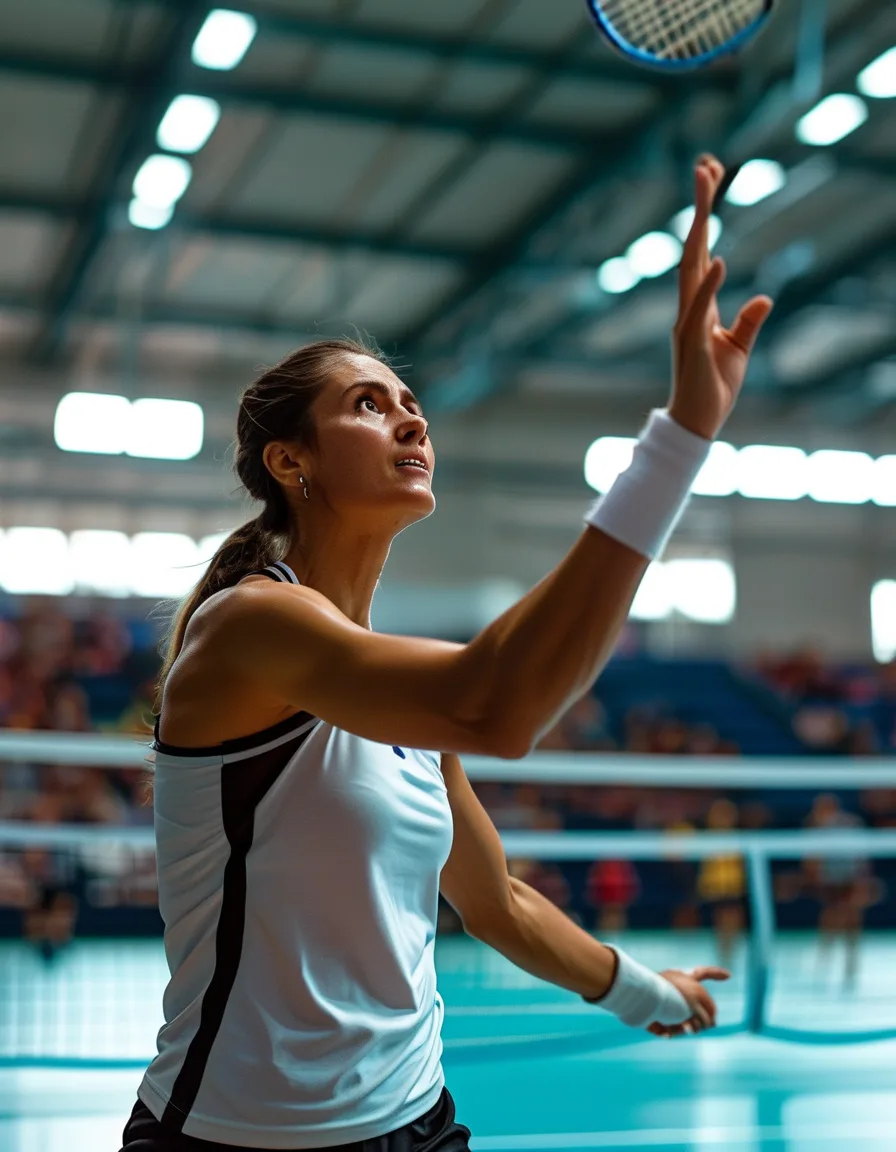
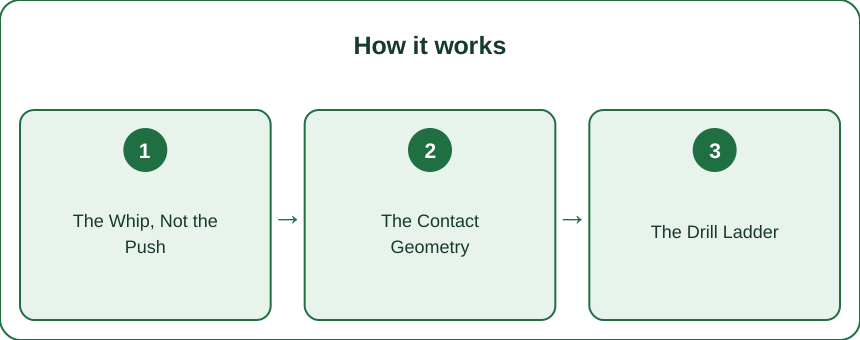
The power source: a smash is a kinetic chain — legs drive, hips rotate, torso follows, shoulder unwinds, elbow leads, and the WRIST snaps last (each link adding speed to the next, like a whip’s tip outrunning its handle) — while the beginner version fires everything at once (the arm-shove that tops out early and tires fast). The feel cue: the racquet head should feel like it’s being LEFT BEHIND and then catching up violently — lag is where the speed lives.
The Contact Geometry
Where and when: contact happens HIGH and slightly IN FRONT (the highest point you can reach with a straight-ish arm, a shoe-length ahead of your body — hitting late-and-behind is the number-one flat-smash cause), the grip stays loose until impact (strangling the handle kills the wrist snap — hold a bird, crush at contact), and the angle truth: steepness beats speed at club level (the smash that lands mid-court fast gets returned; the slower one angled at the front-court floor doesn’t).

The Drill Ladder
The progression: shadow smashes with a towel (snap the towel-crack — the whip timing without a shuttle), the toss-and-hit (partner or self-toss, focus purely on high-and-front contact), the half-court smash rally (partner lifts, you smash at 70% focusing steepness — volume builds timing), and the jump-smash graduation (much later — the jump adds angle for players whose grounded smash is already clean; jumping with messy mechanics just adds altitude to errors).
The Smash IQ
Using it well: smash selection beats smash speed (the winner comes from smashing the RIGHT lift — short lifts near the tape, not desperate deep ones from your back line), the placement menu (at the body’s racquet-hip is the awkward-return king; the lines are for winners, the body is for setups), the energy budget (smashes cost the most of any stroke — the all-smash game plan gasses by game two; the smash is punctuation, not prose), and the follow-up habit (recover racquet-up expecting a return — the smash that wins points is often the SECOND one). Power was never the arm; it was the order of operations.
Chain not arm, high and in front, steep beats fast, punctuation not prose. The smash is a timing skill wearing a power costume — drill the whip and the exclamation mark arrives.
Keep Reading
This article is for general informational and styling purposes only. Fit, sizing, and product availability may vary.