Badminton Elbow Pain Is Usually a Grip Problem, Not a Swing Problem — Here's the Fix
Quick Answer: Badminton elbow pain most often traces to an overly tight, locked grip that transfers shock directly into the forearm tendons on impact, rather than a swing mechanics flaw. Loosening grip pressure to roughly ‘holding a bird gently’ and re-gripping only at contact reduces this transferred shock significantly.
You’ve adjusted your swing angle, changed your racket weight, even taken time off — and the elbow pain keeps returning. The grip, not the swing, is usually the actual source.

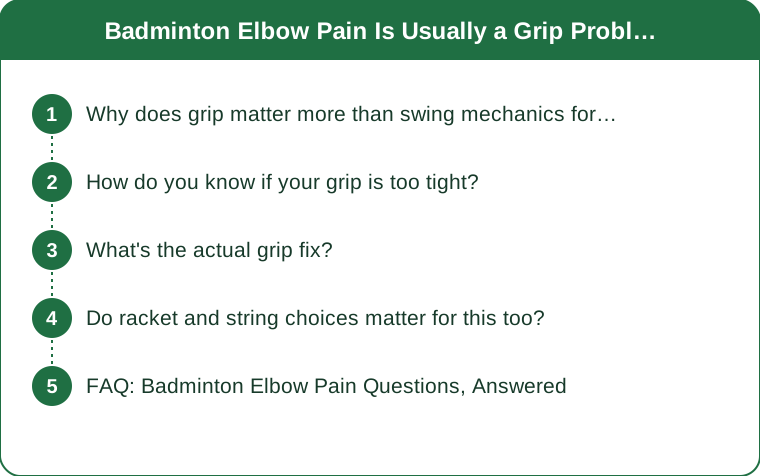
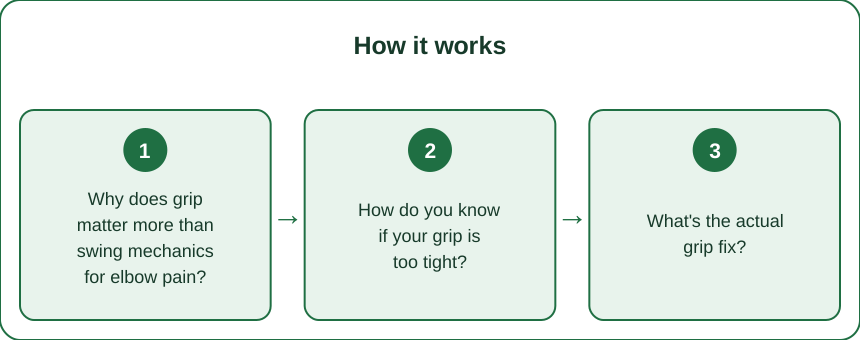
Why does grip matter more than swing mechanics for elbow pain?
A tightly clenched grip held throughout the entire swing creates a rigid connection from racket to forearm, meaning the full shock of every shuttle contact transfers directly into the forearm tendons with no absorption. A relaxed grip that only tightens at the moment of contact lets the hand and wrist absorb some of that shock before it reaches the elbow.
This is functionally similar to how tennis elbow develops in tennis players — the mechanism is grip-and-impact-transfer, not the sport’s specific swing pattern.
How do you know if your grip is too tight?
A simple check: if your forearm feels fatigued or tight after just 15-20 minutes of play, well before general match fatigue would set in, that’s a strong sign of grip over-tension. Watching your knuckles during play — visibly whitened knuckles throughout rallies, not just at contact, indicate constant over-gripping.

What’s the actual grip fix?
Hold the racket firmly enough that it won’t slip, but loosely enough that you could wiggle it slightly between shots — a common cue is imagining you’re holding a small bird firmly enough it can’t fly away, but gently enough you won’t hurt it. Tighten grip only in the split-second of contact, then relax immediately after.
This takes conscious practice to retrain, since a tight, constant grip often becomes an unconscious habit, especially under match pressure or when nervous.
Do racket and string choices matter for this too?
Yes, to a lesser degree. A slightly larger grip size and lower string tension both reduce the shock transferred to your forearm on contact, complementing the grip-pressure fix. If you’ve recently strung tighter for more control, that’s worth reconsidering if elbow pain started around the same time.
FAQ: Badminton Elbow Pain Questions, Answered
How long does it take to fix elbow pain by changing grip pressure?
Many players notice reduced pain within 2-3 weeks of consistently loosening grip pressure, though existing tendon irritation may need additional rest and possibly professional treatment to fully resolve.
Should I stop playing if I already have elbow pain?
Mild, occasional discomfort can sometimes be managed with the grip fix and rest between sessions. Persistent or worsening pain should be evaluated by a doctor or physical therapist before continuing to play through it.
Does racket weight matter for elbow pain too?
A racket that’s too heavy for your current forearm strength can contribute, but grip tension and string tension are usually the more significant factors to address first. This is general information, not medical advice.
TL;DR:
- Grip tension, not swing mechanics, is the more common source of badminton elbow pain
- A constantly clenched grip transfers full shuttle-impact shock straight to the elbow
- Relax grip between shots, tighten only at the moment of contact
- Larger grip size and lower string tension both reduce shock transfer further
This is general information, not medical advice — persistent pain deserves a professional evaluation, not just a grip adjustment.
Keep Reading
This article is for general informational and styling purposes only. Fit, sizing, and product availability may vary.